
Program Philosophy
Nature
BASED LEARNING
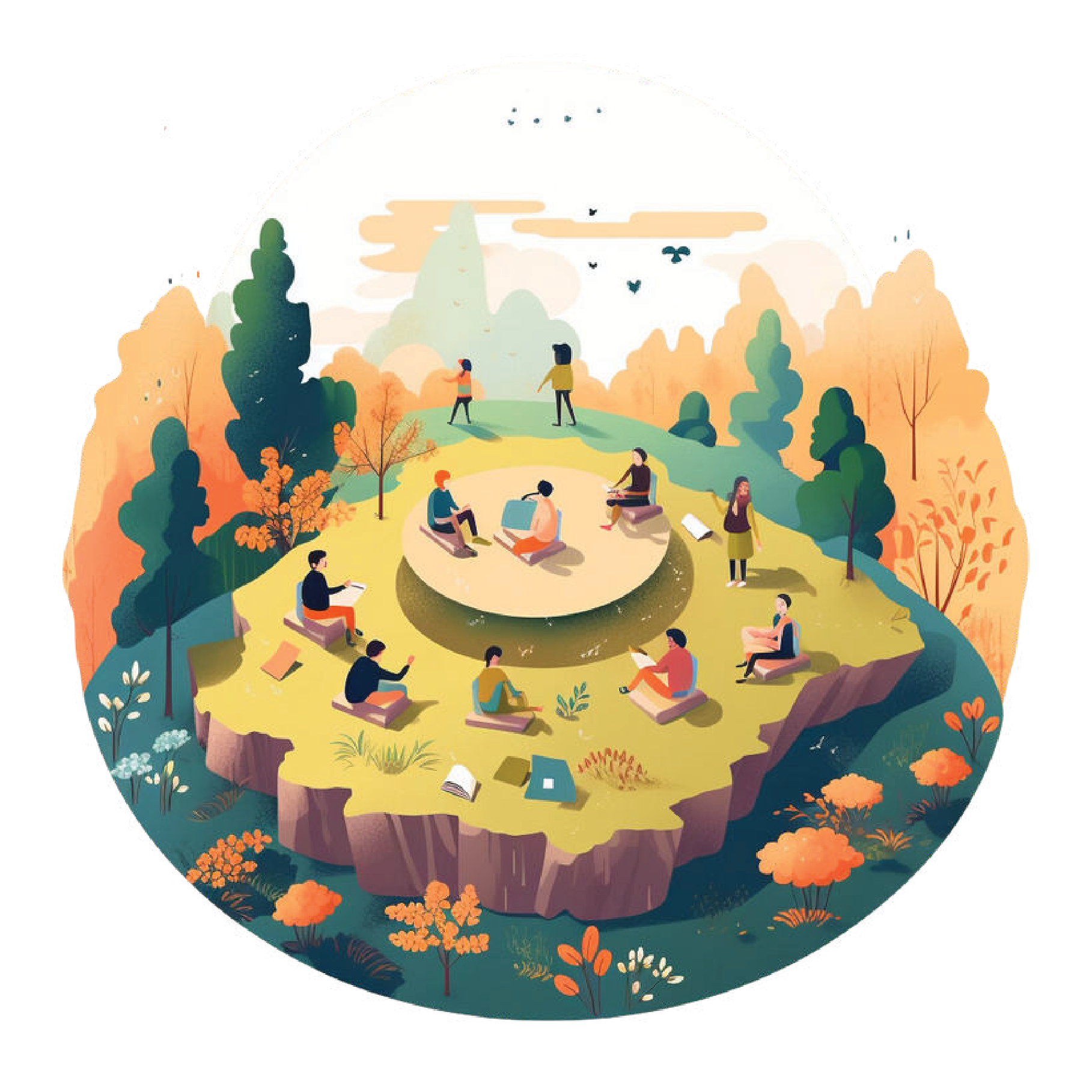
Since evolution to now, human beings have evolved by spending 99.9% of their time close to nature. Our inspirations and rudimentary technological adaptation have been in concurrence with nature. Intentionally being in nature promotes Attention Restoration among other beneficial factors, where the brain’s ability to absorb relevant information significantly increases while simultaneously getting relaxed. In the last two centuries, there has been a severe imbalance in our connection with nature. It is essential and imperative that we reconnect with nature to develop the Hybrid Mind.


Project
BASED LEARNING
PROBLEM
BASED LEARNING
The skill of problem-solving is as essential as it gets. The ability to problem solve as a group enables its members to explore their leadership style and constructively work on areas of improvement. Problem Based Learning creates an environment that significantly improves group dynamics and moves closer to self-actualization.


PLACE
BASED LEARNING
One can learn all about the theory, history, and significance of any place by being in a classroom but will honestly never know if the place hasn’t been explored experientially. In the method of learning funnel, the filtration process cannot proceed because it is necessary to be experientially immersive to create any sort of real impact. Such is the importance of Place-Based Learning, where participants intentionally immerse themselves in the local culture to gain maximum learning outcome.
Inquiry
BASED LEARNING
Inquiry-Based learning involves posing thought-provoking questions, allowing students to develop their hypotheses, and engaging in hands-on activities to seek answers. It promotes a more profound understanding, independent learning, and applying knowledge in real-world contexts by encouraging curiosity, critical thinking, and problem-solving skills. It empowers students to drive their learning process, fostering a sense of ownership and curiosity, leading to meaningful and lasting learning outcomes.

OUTDOOR AND EXPERIENTIAL LEARNING (OAEL)
Outdoor and Experiential Learning refers to a dynamic approach to education, encompassing various inclusive techniques primarily conducted outdoors. Rooted in six core principles, OAEL promotes learning, improved health and wellbeing and environmental awareness.
Key Principles of OAEL
Approach to Learning
OAEL emphasizes active, hands-on learning experiences.Sensory Engagement
OAEL engages all senses and domains, fostering holistic learning experiences.Experiential in Nature
Learning through direct engagement and reflection is at the core of OAEL.Outdoor Focus
OAEL activities primarily occur outdoors, connecting participants with nature.Interdisciplinary
OAEL integrates various subjects and disciplines, promoting a comprehensive understanding of the world.Relationship with Nature
OAEL explores human interactions with natural resources, nurturing environmental stewardship.Direct instruction, self-direction, and every element in between are part of OAEL’s holistic educational approach. OAEL programs promote specialized knowledge and skills and subtle and impactful behavioral and attitude changes, improving health, wellness and environmental awareness.
Benefits of OAEL
- Enhances cognitive abilities
- Builds Resilience
- Facilitates social interaction
- Improves sensory and motor skills
- Develops social and emotional skills
- Promotes a sense of place and stewardship
- Encourages practical application of knowledge
- Fosters creativity and collaboration among students
Fair Trade Learning
iEXP360 considers mutual learning practices while designing and executing programs, ensuring that community members and students benefit equally. It uses the Fair Trade Learning principles in mind while designing their programs.
Educational institutions and program providers collaborate with community partners to set shared goals that reflect local needs. Partnerships are built on mutual respect and a commitment to positive change.
Programs empower host communities to lead in development, implementation, and decision-making, ensuring local knowledge and priorities shape the experience.
Inclusivity, reciprocity, and mutual learning foster meaningful engagement between participants and host communities, encouraging active listening, learning, and contribution.
Transparent communication fosters alignment with community needs through regular feedback, fostering trust and collaboration.
Comprehensive pre-orientation, on-site orientation, and debriefing prepare participants for culturally sensitive and meaningful engagement.
Discussions on economic impacts involve open dialogue between providers and community stakeholders. Cultural norms around finances are respected, and economic benefits are equitably distributed.
Programs and partnerships undergo regular assessments to measure impact, effectiveness, and sustainability, with a focus on continuous improvement and accountability.
Programs uphold ethical animal interactions, respecting the Five Freedoms for Animal Welfare. Participants are educated on humane treatment practices in line with legal and ethical standards.
